Introduction
Suicide is a difficult topic to discuss, but it's an issue that affects many people in India. In fact, according to data from 2001 to 2012, suicide rates in India have been steadily increasing. It's important that we talk about this issue and work together to prevent it.
The Alarming Statistics
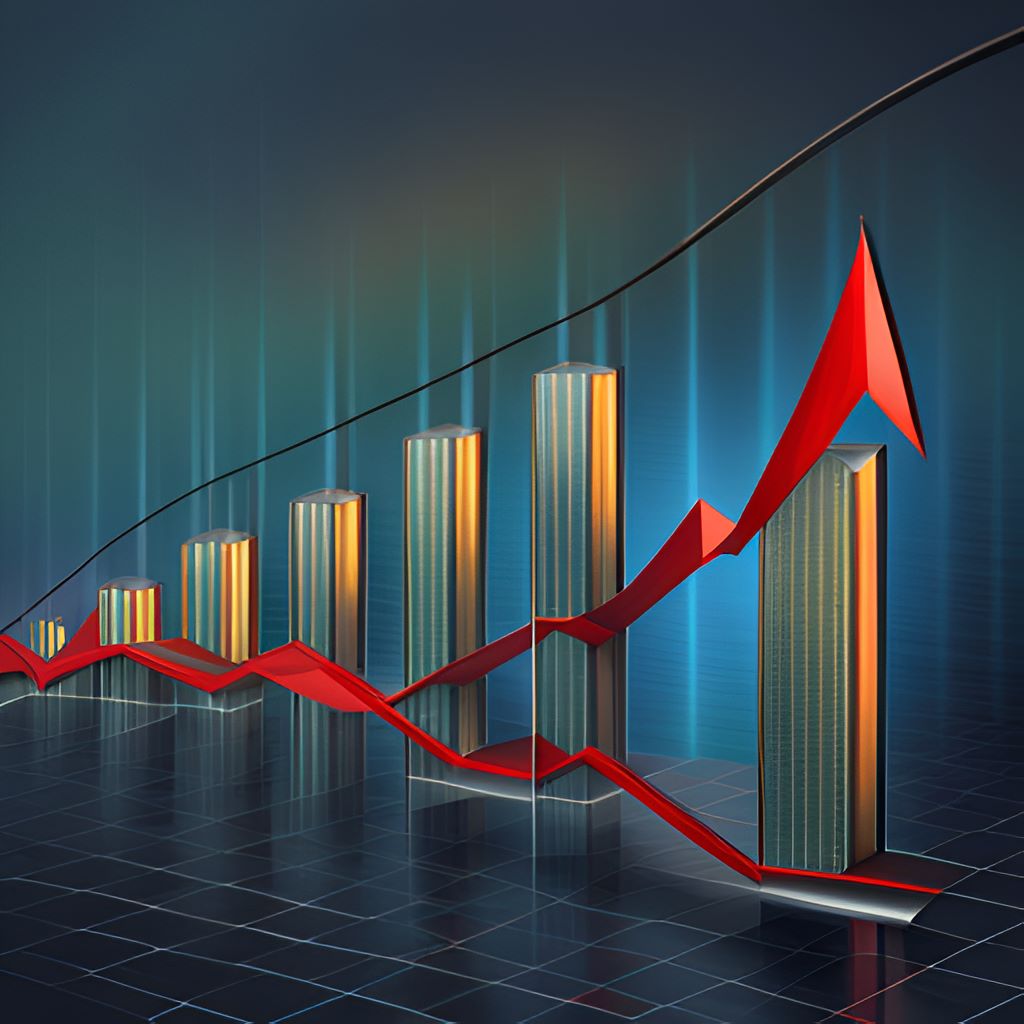
Between 2001 and 2012, India witnessed a staggering increase in suicides. According to the National Crime Records Bureau, the number of suicides increased from 108,593 in 2001 to 135,445 in 2012, representing a 24.7% increase.
The suicide rate in India also increased from 10.3 per 100,000 population in 2001 to 11.0 per 100,000 population in 2012. This is significantly higher than the global average of 9.5 per 100,000 population.
Visualizing this data can help us better understand the scope of the problem and identify areas where interventions may be most effective. By looking at the numbers, we can see that suicide is not just a personal tragedy, but a public health concern that requires our attention and action.
The issue of suicide in India is complex and multifaceted, with factors such as poverty, unemployment, mental health issues, and social stigma all playing a role. It is important that we address this issue with empathy and understanding, and work towards finding solutions to prevent these tragic losses.

TOTAL SUICIDE COUNT
MALE COUNT
FEMALE COUNT
Dataset
The primary data source for this project is the National Crime Records Bureau (NCRB) report on suicides in India. The dataset contains information on various factors such as age, gender, occupation, causes, and methods of suicide.
State
Name of the Indian state where the data belongs to.
Year
Year ranges from 2001-2012, the complete field contains data for that year respectively.
Type_code and Type
Major classification of “Why Did People Commit Suicide” and Subclassification of type code.
Gender
Either the person committing suicide was a male/female.
Age_group
What age group does the person belong to who committed suicide.
Total
Count of people who committed suicide and has the common above 6 mentioned parameters.
Visualization
Tableau is used to create a series of visualizations to explore different aspects of suicide cases in India. The visualizations include charts, graphs, maps, and interactive dashboards.
- All
- Bar Graph
- Pie and Bubble Chart
- Line Chart(forecast)
- Maps
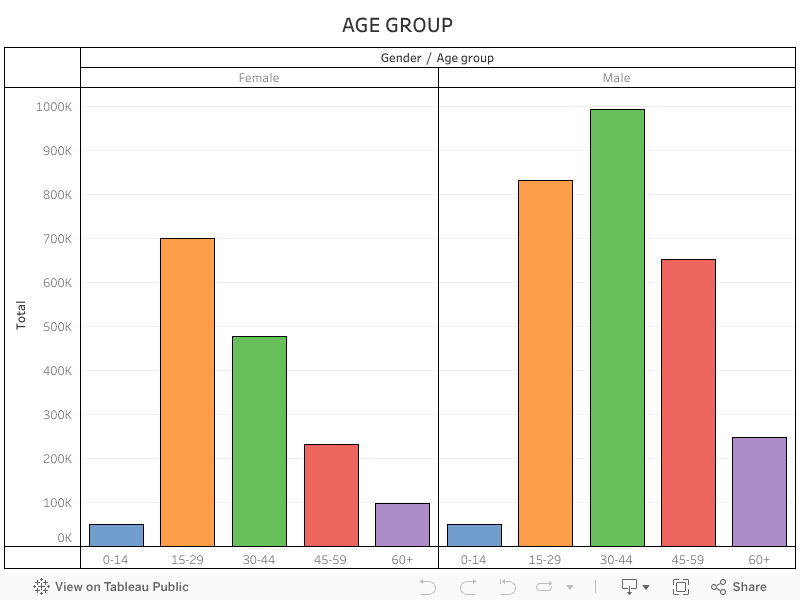
AGE GROUP
Total is unusually high when the combination of Age_group and Gender is 30-44 and Male.
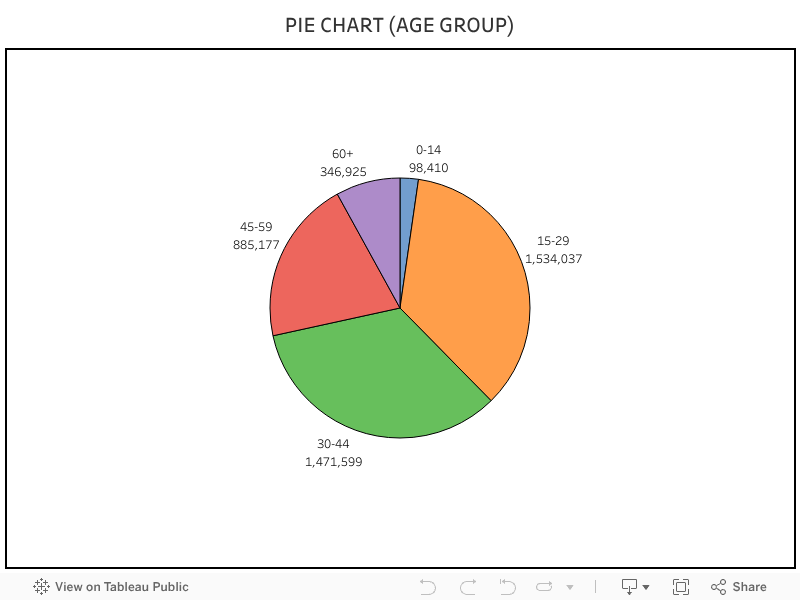
PIE CHART
Total is unusually low when Age-group is 0-14 and it is high when Age-group in 15-29.
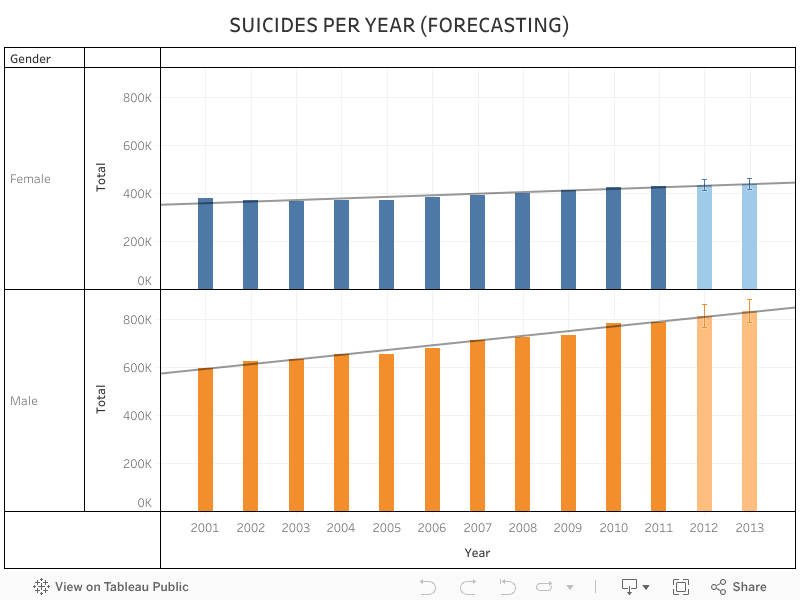
SUICIDES PER YEAR (FORECASTING)
Total (Sum) Forecast:1,187,674 (2013) Total (Sum) Forecast:1,201,432 (2014)
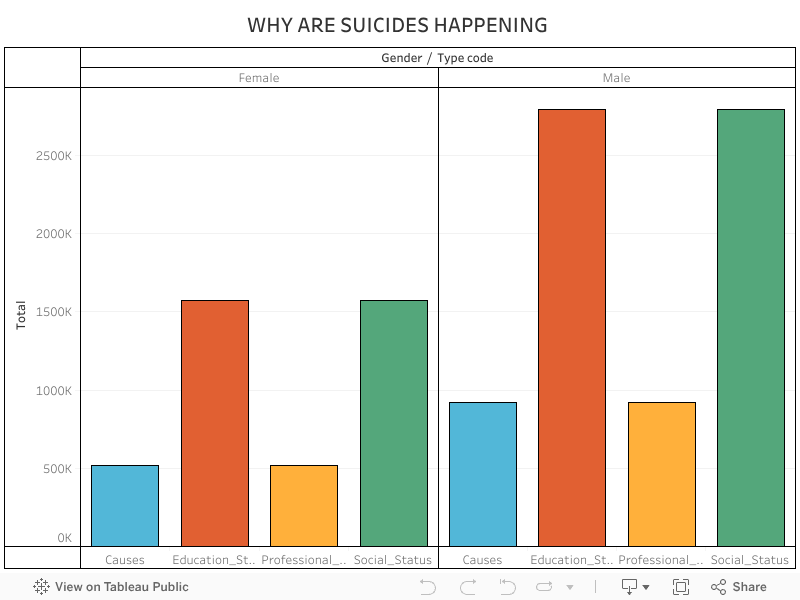
WHY ARE SUICIDES HAPPENING
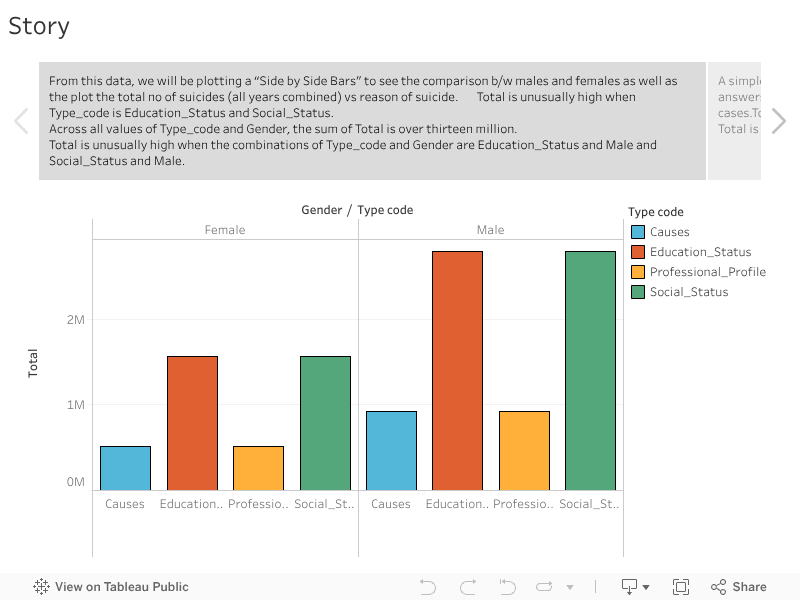
Total is unusually high when Type_code is Education_Status and Social_Status.
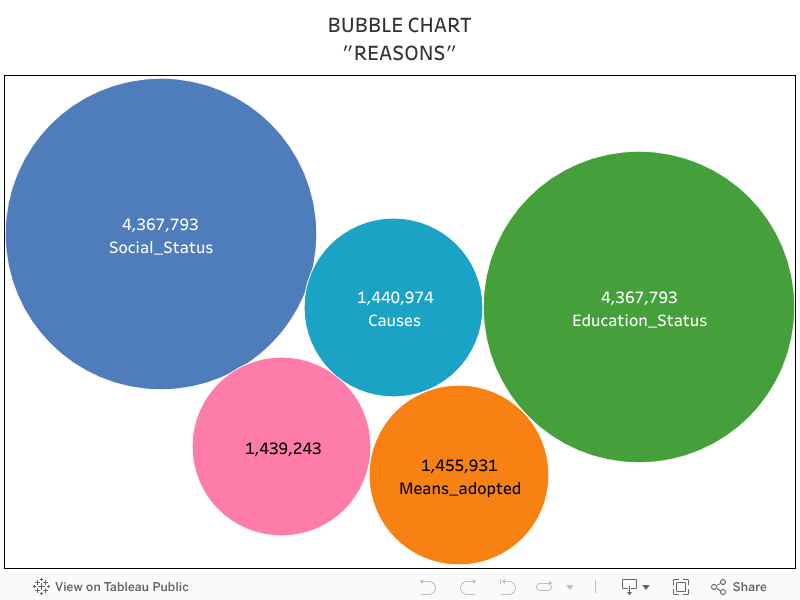
BUBBLE CHART "REASONS"
Total is unusually high when Type_code is Education_Status and Social_Status.
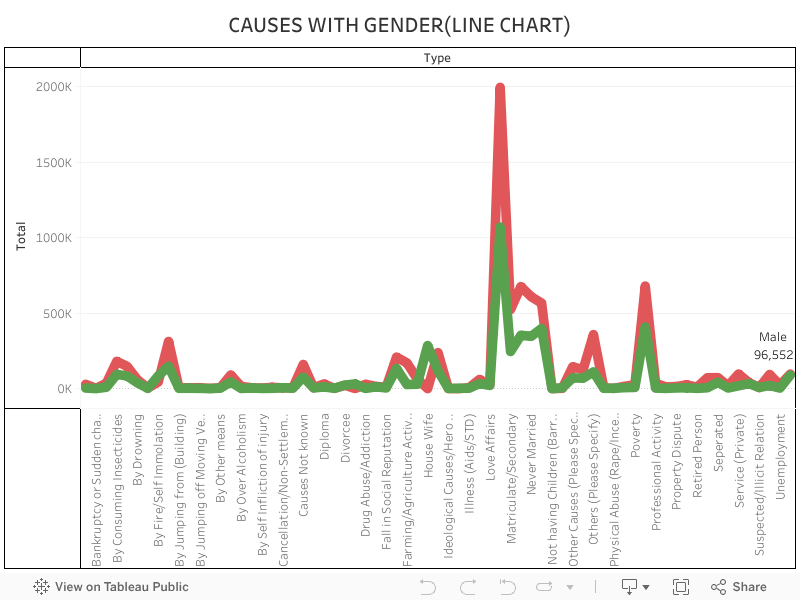
CAUSES WITH GENDER(LINE CHART)
Total is unusually high when the combination of Type and Gender is Married and Male. Total is unusually high when Type is Married.

SUICIDES IN EACH STATE OVER THE COURSE OF 12 YEARS
Total is unusually high in Maharashtra, West Bengal, Tamil Nadu, Andhra Pradesh and Karnataka.
DashBoards and Story
Data dashboards are a summary of different visualizations, but related data sets, presented in a way that makes the related information easier to understand and interactive . A Tableau story narrates key insights to answer a data question via a series of logically connected visuals. We build Tableau stories using a collection of sheets in a Tableau workbook called story points.
DashBoard-1
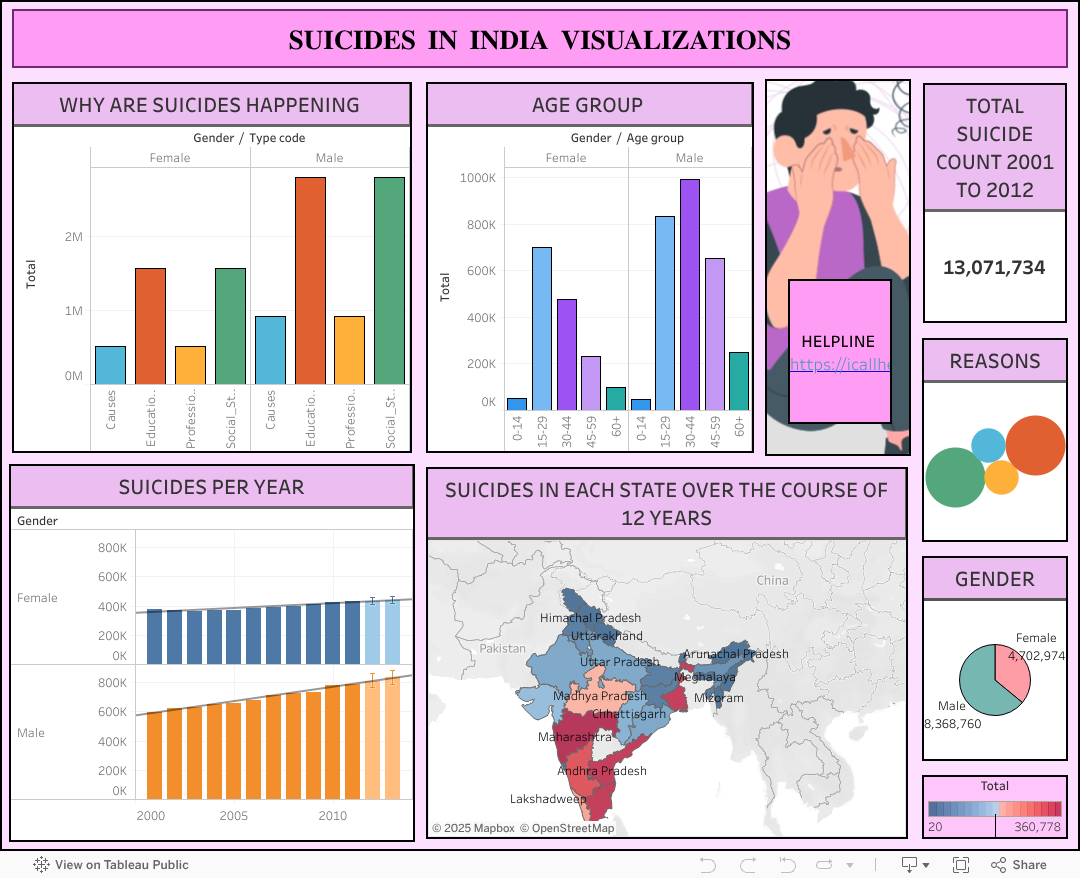
DashBoard-2
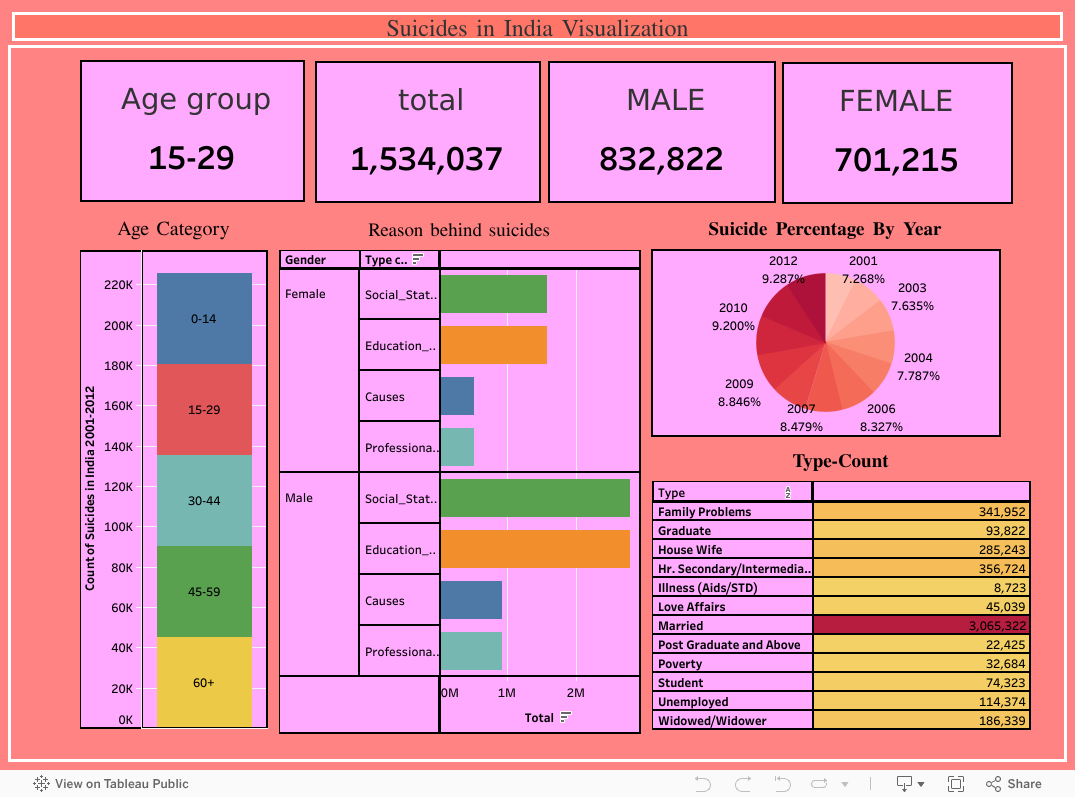
Story
Conclusion
The visualizations of suicides in India from 2001 to 2012 reveal a concerning increase in suicide rates, particularly among males. There are notable disparities across different age groups and regions, highlighting the influence of socioeconomic conditions and cultural factors. While the data does not explicitly provide the causes of suicides, it suggests the presence of mental health issues, societal pressures, and economic stress as contributing factors. The visualizations underscore the urgent need for increased mental health support, awareness campaigns, and improved access to services. Targeted interventions for vulnerable age groups and addressing gender-specific challenges are crucial. A comprehensive approach combining preventive measures, early intervention, and policy changes is essential to effectively address the complex issue of suicide in India.